There is a particular kind of financial pain that creeps up on businesses so slowly that most owners do not notice it until someone finally sits down and adds everything up. It usually starts innocently. You sign up for a project management tool because your team is getting disorganized. Then you add a CRM to track your clients. Then a separate invoicing platform because the CRM does not handle billing well enough. Then a form builder because your website contact form is too basic. Then a reporting dashboard because none of the other tools talk to each other and you need somewhere to see everything in one place.
Before long, you are paying for seven different subscriptions, logging into five different platforms every morning, copying and pasting data between systems that were never designed to work together, and wondering why your operations still feel chaotic despite all the tools you are using to organize them.
Sound familiar? This is the reality for thousands of growing businesses right now. And the frustrating part is that most of them believe this is simply the cost of running a modern business. It is not. It is the cost of using the wrong solution for the wrong problem. The good news is that there is a better way, which is a custom web application.
What a Custom Web Application Really Is
A custom web application is software built specifically for your business. It's neither adapted nor configured from a template. A custom web application is built from the ground up to do exactly what your business needs it to do, in exactly the way your team works, serving exactly the customers you serve.
It lives in a browser, which means your team can access it from anywhere without downloading anything. It can connect to tools you already use. It can automate the repetitive tasks that currently eat hours of your team's time, stifling productivity. It can present data in a way that makes sense for your business rather than in the generic format a software company decided should work for every Tom, Dick, and Harry.
And most importantly, it is yours. You own it. Nobody can increase your pricing, change the features, discontinue the product, or hold your data hostage behind a subscription wall.
The Subscription Trap Nobody Warns You About
When a business is small, subscribing to off-the-shelf software makes complete sense. The tools are ready immediately, the monthly cost feels manageable, and you don’t have to think too hard about setup. But here is what nobody tells you when you sign up.
Every tool you add to your stack is built for a general audience, not for your specific business. The features you actually use are surrounded by dozens of features you will never touch. The workflow the tool assumes you follow is never quite the workflow your business actually uses. So you adapt. You bend your processes to fit the software instead of the software fitting your processes. You work around limitations. You accept friction as the norm.
There is the cost reality as well. Those monthly fees that felt small at the start have a habit of growing. Pricing tiers increase as your team grows. Features that were free get moved behind higher plans. New tools get added to the stack because existing ones have gaps. What started as eighty dollars a month has quietly become over a thousand dollars a month, and that figure does not include the hidden cost of the hours your team spends navigating disconnected systems every single week. A custom web application changes this equation entirely.
Let us look at the five types of tools a well-built custom web application can replace.
Tool One: Your Project Management Software
Most businesses use project management tools to track tasks, assign work, set deadlines, and monitor progress. These tools work reasonably well in isolation. The problem is that they rarely connect naturally with the rest of your business. Your project data sits in one place. Your client information sits somewhere else. Your invoices are in another system entirely. Nobody has a complete picture of any single client or project without opening three different tabs.
A custom web application can bring all of this together. Projects, tasks, timelines, client details, team assignments, and status updates can all live in one place, designed around how your business actually runs. Your team stops switching between platforms and starts working in a single environment built for them.
Tool Two: Your CRM
Customer Relationship Management (CRM) tools are some of the most over-engineered pieces of software on the market. They are packed with features built for massive sales teams that your ten-person business will never need. Yet you pay for all of it because the basic tier does not include the two or three features you care about.
A custom application would include a CRM component built precisely around your sales process and client journey. The fields that matter to your business. The pipeline stages that reflect how you actually sell. The client history your team needs to see at a glance. Nothing more, nothing less. And because it is part of the same system as everything else, client data flows naturally into projects, invoices, and reports without any manual entry or awkward integrations.
Tool Three: Your Reporting and Dashboard Tool
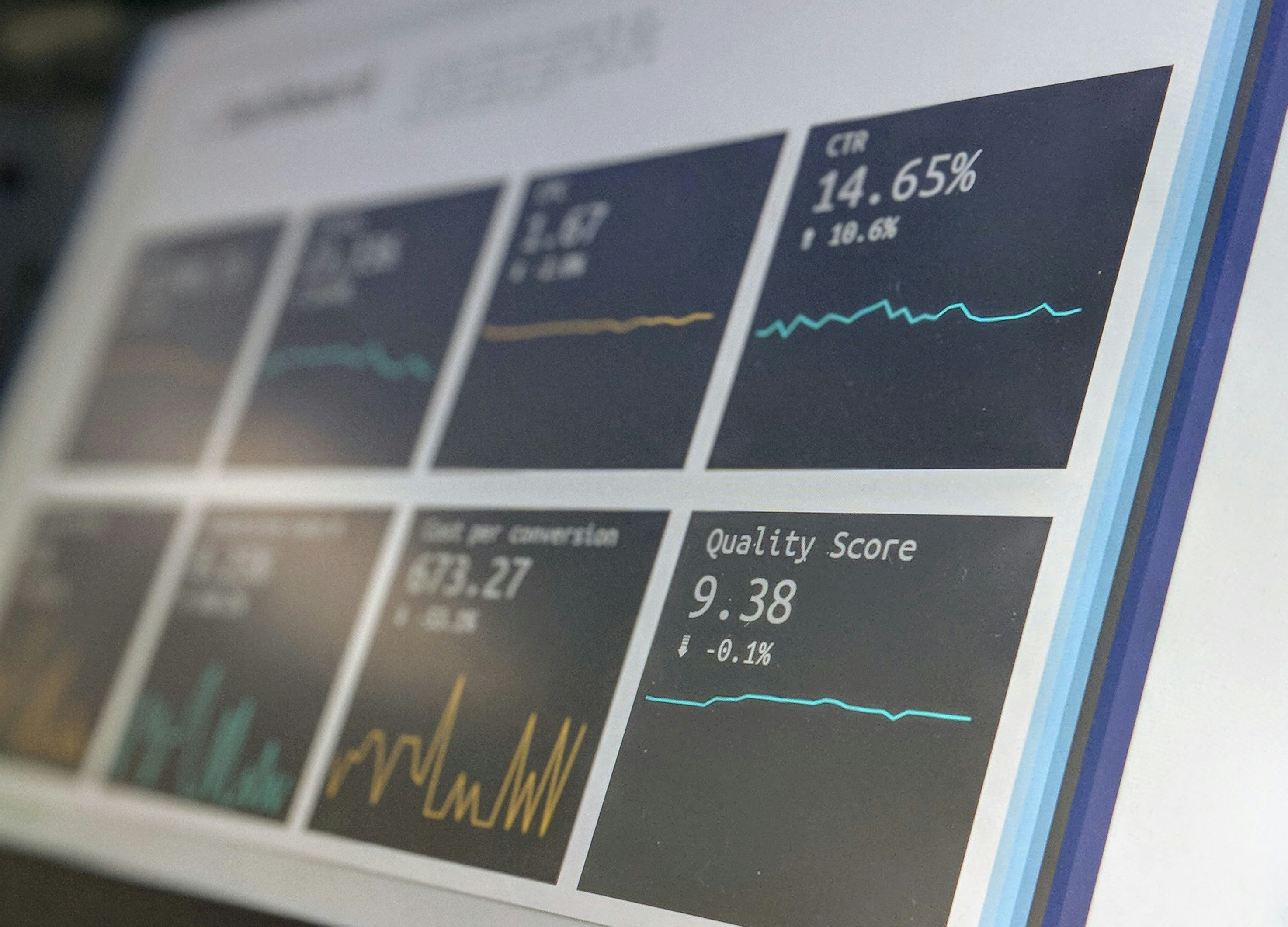
Image source: Unsplash
If you are currently exporting data from multiple platforms, pasting it into spreadsheets, and manually building reports to understand how your business is performing, then you already know how painful this process is. It is slow, prone to error, and always slightly out of date by the time anyone reads it.
A custom web application can include a live reporting dashboard that pulls data from every part of your operation in real time. Revenue, project status, team workload, client activity, pipeline value — all visible in one place, always current, always accurate. No spreadsheets or exports are involved, and you wouldn't have to guess whether the numbers you are looking at are from this week or last week.
Tool Four: Your Form and Data Collection Tools
Many businesses use separate form builders to collect enquiries, onboard new clients, gather feedback, or process requests. These forms often exist in isolation, disconnected from the rest of the business. A submission comes in, an email notification goes out, and someone manually copies the information into wherever it actually needs to go.
Inside a custom application, forms and data collection are fully integrated. A new client enquiry can automatically create a record, trigger a follow-up task, notify the right team member, and begin a workflow, all without anyone touching it manually. This effectively saves time and the data goes exactly where it needs to go immediately every single time.
Tool Five: Your Automation and Integration Platform
Tools like Zapier and Make have become essential for businesses trying to force their disconnected software to communicate. They are clever solutions to a problem that should not exist in the first place. You are essentially paying a third platform to make two other platforms talk to each other — and when something breaks in the chain, it can be surprisingly difficult to diagnose.
A custom web application eliminates the need for most of these workarounds because everything is already connected internally. The automation is built into the application itself, not bolted on from the outside. Workflows trigger automatically. Data moves without human intervention. Processes that currently require four manual steps and a Zap happen instantly and invisibly.
The Data Ownership Argument That Most Businesses Overlook
Here is a dimension of this conversation that rarely gets enough attention.
When your business data lives across five different SaaS platforms, you do not really own it in any practical sense. Each platform stores your data in its own format, in its own infrastructure, under its own terms. If a platform shuts down, gets acquired, or changes its data export policies, accessing your own business history can become genuinely difficult.
With a custom web application, your data lives where you decide it lives. You control the database. You control the backups. You control who has access and how. Your business history — your clients, your projects, your transactions, your communications — belongs to you completely and is stored in a way that serves your interests, not a software company's interest.
As privacy regulations tighten globally and data governance becomes an increasingly serious business concern, this kind of ownership is not just a technical preference. It is a competitive and legal advantage.
The Build Versus Subscribe Calculation
The honest conversation about custom web applications always comes back to cost. Building something custom requires upfront investment. This is the reality and it is worth acknowledging. However, the calculation is not simply comparing build cost with money spent on monthly subscription. The real calculation is the total cost of ownership over time.
Add up what you are currently spending annually across your tool stack. Include the hours your team loses each month to manual processes, data entry, platform switching, and workarounds. Factor in the productivity that gets lost when systems break or integrations fail. Consider how many times you have had to change your process because a tool changed its pricing or removed a feature.
For most growing businesses, a custom application pays for itself within eighteen to thirty-six months, and then continues saving money and generating operational efficiency for years after that. The longer your business runs, the more valuable owning your own infrastructure becomes.
Omega Digital Agency Is the Right Team to Build Yours

Building a custom web application that actually solves your problems — not one that creates new issues — requires a team that understands both technology and business like Omega Digital Agency. The technical build is only part of the work. The more important part is understanding your workflows deeply enough to design something that genuinely fits them.
At Omega Digital Agency, we build custom web applications for businesses that have outgrown their tool stack and need something built around how they actually operate. We handle everything from discovery and design through to development, testing, and ongoing support. We ask the right questions before we write a single line of code, because a well-designed application starts with a clear understanding of the business it is built to serve.
We have helped businesses consolidate multiple subscriptions into a single platform, automate workflows that were consuming hours of team time every week, and build internal tools that became genuine competitive advantages.
You Do Not Have to Keep Paying for Tools That Were Not Built for You
The stack of subscriptions you are managing right now is not inevitable. It is a temporary solution that many businesses outgrow, and the ones that recognize that early are the ones that scale with less friction, lower costs, and cleaner operations.
Talk to Omega Digital Agency today. Tell us what your current tool stack looks like, where the frustrations are, and what you wish your systems could do. We will show you what is possible when software is built around your business instead of the other way around.
Explore our Web Application Development services or contact our team to book a transformative conversation.
Wondering why your business is not getting enquiries even after spending on building a website? Read this article to get answers.
Loading comments...